Faruk Vele: Being the other - from personal suffering to solidarity with others
In the autumn of 1992, I was nine years old when, while walking through a neighbourhood of my hometown in central Bosnia, I came across a group of a dozen peers. I had known some of them since my earliest childhood.
While jumping around me, they chanted a derogatory word for the ethnic community I come from. It was actually the first time I had heard that word and, to be honest, I didn’t know what it meant, but from their gestures and energy, I realised it wasn’t anything positive.
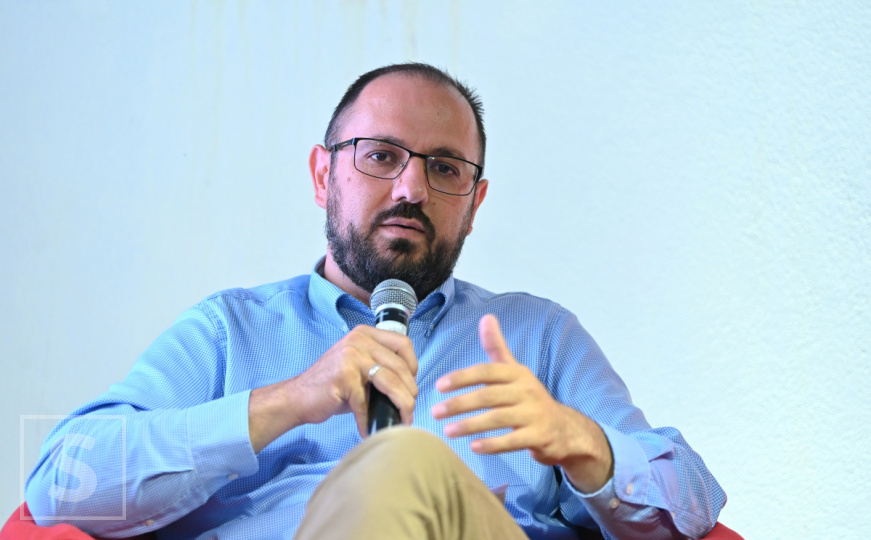
Written by Faruk Vele for DWP Balkan
Bez potrebne većine: Vijećnici Općine Centar odbili podržati izvještaj o izvršenju budžeta
In the nearby cafés sat the adults, among whom I noticed the parents of some of my former friends. Some of them were smirking.
Those boys did not attack me; they continued running like that for a while, and then they left.
However, from that moment of my life, I knew what it meant to be "the other".
Even earlier, during a time when we were all bathing together in the Vrbas river, a neighbour had chased his son away, clearly displeased that he was socialising with boys from another ethnic community. The children were unable to keep up with the pace of change in our community. We were confused by such events. All the more so because adults from different religious communities were communicating less and less, and tensions arose in the town. The image of the previously compact community was torn apart. I would never again see most of the peers I mentioned.
Back then, of course, I didn’t know that "the delimitation of a nation is achieved through multiple types of exclusion" or that "the imagined otherness is the ghostly shadow of imagined communities".[1]
According to Sasha Havlicek from the Institute for Strategic Dialogue (ISD), the fundamental principle of all extremist ideologies is the "dehumanisation of the other", because "when you establish the ‘us’ versus ‘them’ mindset, you can create incredible divisions and conflicts among people".[2]
Unfortunately, I saw this dynamic play out in reality. The events described were more than a graphic introduction to the much more horrific events in my life.
About a year later, while participating in the rescue of severely wounded parents and dead neighbours under a hail of sniper fire and grenades from the Croatian Defence Council (HVO) and the Croatian Army (HV), I first felt how evil begins first with words, and then is put into action.
Many years later, in my own research into the language of hatred, I wrote that hatred, fear and mistrust can lead people to classify others as, "inferior and superior", and then, with the help of disinformation, start viewing them as "insufficiently human".[3]
While researching how such representations of the other are produced and disseminated, I also came across the research of the French professor Renaud de la Brosse on the role of the media in the project of wars in the former Yugoslavia. He points out that propaganda does not just work through political messages, but can also be aimed at causing emotional shock, stirring up hatred and shaping attitudes towards the other.[4] I suppose that is why, during those war days, I was able to hear on the local radio that "the scum needs to be exterminated".
Although some commanders at the Hague Tribunal will admit that "the local Croatian and Muslim population in that town did not want conflict"[5], it was already too late. The snowball of evil had been deliberately set rolling. During 1993 and the beginning of 1994, Gornji Vakuf, the town where I was born, would find itself at the centre of what was to be called a "joint criminal enterprise" [6] during an "international armed conflict"[7] involving the regular forces of the neighbouring Republic of Croatia.[8]
Hundreds of people were killed, many of them civilians, even children, and the town and its surrounding settlements suffered extensive destruction. Among those killed and wounded were people close to me.
The consequences of these events are still keenly felt decades later. Efforts to restore ties are yielding useful results, particularly in the fields of sport and culture, in the economy, and in interpersonal relations in general, but they are often hampered by differing interpretations of events from the recent past and a lack of willingness to understand the suffering of others.
The evil I witnessed instilled in me a desire to meet other human beings who had suffered because of their ethnic and religious affiliation.
Around the same time, some sixty kilometres away, 16 Croatian civilians were killed in the village of Šušanj near Zenica. I would only learn of these events much later in my career as a journalist. According to research[9] "they were mostly elderly people who had not taken part in military operations". The crimes were horrific. "In addition to executions, numerous other forms of war crimes were also recorded: sexual violence, brutal beatings and the systematic destruction of private property".[10]
Among those killed was Vlado Marković, the father of Fra Ivo Marković, a well-known Bosnian Franciscan, theologian, and professor of Franciscan Theology in Sarajevo, peace activist, founder of the multi-religious choir "Pontanima" from Sarajevo, which brings together people of different religious backgrounds and beliefs with the aim of promoting peace, coexistence, tolerance and inter-religious dialogue through joint singing.
In addition to the father of Fra Ivo, with whom he had extensively worked on "overcoming hostilities and reconciliation", nine of his other relatives, 32 neighbours and 82 parishioners from his native parish Brajkovići were killed. His relatives and neighbours, as well as the parishioners of his native parish, were displaced.
A similar encounter with the suffering of "others" took place in a courtroom of the Hague Tribunal. At the trial of Bruno Stojić, the former Minister of Defence of Herzeg Bosnia[11], a doctor who had been the head of the HVO’s preventive medicine service during the war gave evidence. Although he had come to The Hague as "Stojić’s witness", after the prosecutor showed him photographs of detainees from Dretelj after their release in late 1993, among whom he recognised one of his neighbours, he broke down. He said that "it was all terrible and that he was ashamed"[12].
It is obvious, he added at the time, that these people were brought to the very brink of despair, both physically and mentally. "The person who did this is a criminal, even if he were my brother", the witness concluded.[13]
That sentence has stayed with me almost 18 years later. Not because it resolved the past, but because it shows how important it is to be prepared to acknowledge that a crime was committed, even when it was committed by someone from one’s own community.
***
The crime committed against his family did not lead Fra Ivo towards revenge and hatred, nor towards silence. On the contrary, Professor Marković forgave the perpetrators of the crimes in his native village in the summer of 1993.[14] Not only that, he helped refugees from the Bosniak community who had settled in his family’s and relatives’ homes, and he went on to speak even more forcefully about peace, coexistence and the responsibility of his own community.
This is part of the mission of the Bosnian Franciscans, whose calling for centuries has been directed towards PEACE AND GOOD [15], with a deep faith that "coexistence in Bosnia is possible and necessary".[16] Their peace initiatives are known far beyond the borders of Bosnia and Herzegovina.
In the spirit of Adam Michnik’s thought that the right to be proud of one’s own community’s achievements simultaneously entails an obligation to be ashamed of its crimes…[17], Fra Ivo Marković has for years been a harsh critic of all forms of nationalism, and particularly of the nationalist policies of the then-Herzeg Bosnia, believing they led to the Bosnian-Croat conflict with enormous consequences for both communities in Bosnia and Herzegovina.
"Let us repent, we have done evil"[18], Fra Ivo cried out in December 2017, after the verdict against the military and political leadership in Bosnia and Herzegovina, led by Jadranko Prlić and others, with the hope that such court decisions would lead to confronting the past, cathartic processes, and processes of facing the past.
In contrast, Marković is often stigmatised, silenced and attacked within his own community, even when the very defendants, such as Jadranko Prlić, Bruno Stojić or Milivoj Petković, have acknowledged their crimes, expressed remorse and sought the victims’ forgiveness. Some authors, precisely because of this advocacy of the truth, believe that Fra Ivo Marković "saved the honour of the Croats".[19]
The work of this Bosnian Franciscan inspired people from other ethnic and religious communities. One such attempt is the study "Topografija boli: Hermeneutika pomirenja u bosanskom historijskom iskustvu" (Topography of Pain: A Hermeneutics of Reconciliation in the Bosnian Historical Experience)[20] by Mr Harun Bišić, a former imam and the former director of the Abraham Institute in Ljubljana.
While exploring the links between the historical crime, collective memory, space and the possibility of reconciliation, Bišić writes about the connections between his own family and the Marković family, as well as the crimes committed against that family in the village of Pojske in 1874 and almost 120 years later in the village of Šušanj, in the same micro-location.
The author’s central idea is that the place where the crime occurred should not be viewed merely as a geographical space. It becomes a kind of "place of memory" (locus memoriae), a space in which trauma, silence, responsibility and the possibility of reconciliation intertwine. He pays special attention to the experience of survivors and returnees, among them Anto Vidošević, whose testimony he uses to reflect on the relationship between individual guilt, collective identity and forgiveness.
Bišić’s study becomes an interesting point in the culture of memory in Bosnia and Herzegovina: a descendant of a family whose ancestor tried to protect a Catholic family returns, more than a century later, and writes about the suffering of another Croatian family and community.
Thus, Bišić does not remain solely within the "victim – perpetrator" relationship, but also introduces the heirs of memory into the investigation. In fact, they do not use their own family memory to shut themselves away in their own group’s suffering, but rather as a starting point for understanding the suffering of the other.
***
Although my own family was also a victim of the policies and actions of those convicted in the International Criminal Tribunal for the former Yugoslavia (ICTY) case "Prlić et al.", I have dedicated a significant number of texts to researching and shedding light on the crimes committed specifically against Bosniak Croats: in Grabovica (the case of the murder of the girl Mladenka and her family[21]), Trusina, Bugojno, and especially the painful case of the murder of Franciscan friars, Fra Nikica Miličević and Fra Leon Migić, at the Fojnica monastery in November 1993.
I called the last crime a shot in the heart of Bosnia.[22]
In some cases, I have been attacked for similar texts; parts of my community and politically fanatical individuals have sometimes called these writings a kind of "betrayal" (of what?!), and at times, open threats have also been made against my family.
The examples cited show that the most difficult form of solidarity is to acknowledge the suffering of others. Especially when it would be easier to remain silent about the truth, and particularly when you come from a community and a family that has suffered itself.
Why is there a lack of understanding of the suffering of others in Bosnia and Herzegovina as a prerequisite on the path to catharsis and peace? How can this be a problem for a human being? The reason for this is not only different memories of the past but also concrete political interests. For parts of the political elite in Bosnia and Herzegovina, maintaining fear, mistrust and divisions can serve as a means of political mobilisation and preserving positions of power.
For this reason, facing the past and the process of building trust are not always politically desirable, especially where an honest acknowledgement of the crimes and suffering of one’s own community would call into question the existing narratives and ideological frameworks whose maximalist goals were at the root of the conflicts during the 1990s wars in the former Yugoslavia, including the genocide against the Bosniaks.
In this regard, it is worth recalling Noel Malcolm’s warning that one of the greatest obstacles to understanding the war in Bosnia and Herzegovina is the assumption that what happened was the result of "natural, spontaneous and at the same time necessary historical forces". Such an interpretation, Malcolm warns, can obscure the actions of specific individuals and political actors who instigated the conflict and subsequently sought to present it as the product of impersonal and inevitable historical processes.[23]
Even today, we witness how difficult the relationship with the past is. The institutional and public glorification[24] of war criminals who were convicted in a final judgment, as was the case with Ratko Mladić, a convicted war criminal for genocide and crimes against humanity, in the days of his final farewell in August/September 2026, shows that memory can still be used to re-establish the division between "us" and "them".
***
Perhaps it was a similar experience of suffering that connected me and Fra Ivo Marković.
The result of these numerous conversations, in addition to numerous newspaper and online articles, is the book Franjevci – Čuvari Bosne (The Franciscans – Guardians of Bosnia), which I authored, and which, contrary to the narratives that currently dominate the Bosnian-Herzegovinian context, testifies through the experience of the Bosnian Franciscans that "coexistence is possible, that multiculturalism is possible, that dialogue is possible, and that peace is not just a pause between wars".[25]
There are no guarantees for any of this, but the first step is indeed the acknowledgement of another’s suffering.
For this to happen, perhaps monuments of "one’s own shame" are necessary, whether physical or rendered into written and other works.
When we "multiply the monuments of our own shame, we have created the conditions for a culture of reconciliation and the conditions to replace the region’s darkness with light".[26]
* * *
Mišljenja i stavovi objavljeni u rubrici "Ja mislim" su isključivo lični stavovi autora tekstova i moguće da ne odražavaju stavove redakcije portala Radiosarajevo.ba
[1] Jeremy Walton, "Zamišljene Drugosti: o postimperijalnim nacionalizmima", Revija za sociologiju, volume 55, No. 1 (2025), 45–68, https://hrcak.srce.hr/file/493123.
[2] Documentary "Zašto mrzimo?", Hrvatska radiotelevizija 2 (HRT 2). Available at: https://www.youtube.com/watch?v=_S43iSyYeqU
[3] Faruk Vele, Konfliktni potencijal jezika mržnje u Bosni i Hercegovini, Faculty of Political Sciences, Sarajevo, 2021, p. 53, according to Kenan Dautović, Prevencija konflikta u međunarodnim odnosima, Travnik: BZK "Preporod", 2007.
[4] De la Brosse, R. (2000). "Politička propaganda i projekt ‘Svi Srbi u jednoj državi’: posledice instrumentalizacije medija za ultranacionalističke svrhe". Available at: https://www.icty.org/x/cases/slobodan_milosevic/prosexp/bcs/rep-srb-b.htm
[5] "Prlićevo pismo Gornjem Vakufu", SENSE – Centar za tranzicijsku pravdu, September 30, 2009, https://arhiva.sensecentar.org/vijesti.php?aid=7569.
[6] International Criminal Tribunal for the Former Yugoslavia, Office of the Prosecutor, "Statement of the Office of the Prosecutor in Relation to the Judgement in the Case Prosecutor v. Jadranko Prlić et al.," November 29, 2017, https://www.icty.org/en/press/statement-of-the-office-of-the-prosecutor-in-relation-to-the-judgement-in-the-case-prosecutor
[7] International Criminal Tribunal for the Former Yugoslavia (ICTY), Prosecutor v. Jadranko Prlić et al., Case No. IT-04-74-A, Appeals Chamber, Judgement, November 29, 2017, para. 233. Official judgment, vol. 1
[8] Jasmin Agić, "Gornji Vakuf – jasan primjer umiješanosti Hrvatske u rat u BiH," Al Jazeera Balkans, October 30, 2018, https://balkans.aljazeera.net/teme/2018/10/30/gornji-vakuf-jasan-primjer-umijesanosti-hrvatske-u-rat-u-bih.
[9] Harun Bišić, "Bosanska tragedija u topografiji boli: Hermeneutika pomirenja – Memoria, Iustitia, Reconciliatio," Bosna Franciscana, No. 64 (2026), 150.
[10] Ibid.
[11] Herzeg Bosnia was a self-declared separatist quasi-state established by Croat nationalists. (Interpreter’s note)
[12] Sense Transitional Justice Center, "Svjedočenje koje ‘bode u srce’," March 3, 2009, report from the trial Prlić et al., https://arhiva.sensecentar.org/vijesti.php?aid=6950.
[13] Ibid.
[14] "Fra Marković je oprostio zločincima za pokolj u Šušanju, ali i Džaferoviću koji je bio šef policije u Zenici", Dnevni list, https://www.dnevni.ba/clanak/fra-markovic-je-oprostio-zlocincima-za-pokolj-u-susnju-ali-i-dzaferovicu-koji-je-bio-sef-policije-u-zenici
[15] Petar Anđelović, Mi ostajemo, ART Rabic, 2009., p. 21.
[16] Ibid., p. 37
[17] Adam Michnik and Jürgen Habermas, "Overcoming the Past", New Left Review, No. 203, January – February 1994, https://newleftreview.org/issues/i203/articles/jurgen-habermas-adam-michnik-overcoming-the-past
[18] Faruk Vele, "Fra Ivo Marković: Pokajmo se, napravili smo zlo", Radiosarajevo.ba, December 1, 2017, https://radiosarajevo.ba/vijesti/bosna-i-hercegovina/fra-ivo-markovic-pokajmo-se-napravili-smo-zlo/283401
[19] Predrag Bagovčanin, "Nacionalistički napadi na fra Ivu Markovića, čovjeka koji je spasio obraz Hrvatima", Tačno.net https://tacno.net/nacionalisticki-napadi-na-fra-ivu-markovica-covjeka-koji-je-spasio-obraz-hrvatima/
[20] Harun Bišić, "Bosanska tragedija u topografiji boli: Hermeneutika pomirenja – Memoria, Iustitia, Reconciliatio," Bosna Franciscana, No. 64 (2026), 150.
[21] Faruk Vele, "Klekni u Grabovici," Radiosarajevo.ba, September 9, 2026, https://radiosarajevo.ba/metromahala/teme/klekni-u-grabovici-masakr-nad-civilima/652326.
[22] Faruk Vele, "In memoriam | Sjećanje na ubijene fojničke fratre: Pucanj u dušu Bosne", Radiosarajevo.ba, November 14, 2024.
[23] Noel Malcolm, Bosna: kratka povijest (Sarajevo: Buybook, 2011)
[24] Radio Slobodna Evropa, "Veličanje Ratka Mladića na skupu u Banjaluci", September 1, 2026, https://www.slobodnaevropa.org/a/bih-banja-luka-ratko-mladic/33845008.html
[25] Faruk Vele, "Franjevci – čuvari Bosne", Sarajevo: Art Rabic, 2025.
[26] Radiosarajevo.ba, "Snažan govor prof. Nerzuka Ćurka na promociji knjige Dragana Bursaća: Zašto je BiH nemoguće uništiti", 2025, https://radiosarajevo.ba/metromahala/ja-mislim/snazan-govor-prof-nerzuka-curka-na-promociji-knjige-dragana-bursaca-zasto-je-bih-nemoguce-unistiti/593070
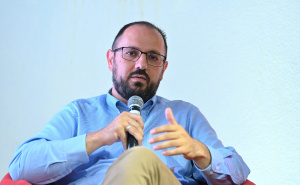
Who is Faruk Vele? Journalist, publicist and editor from Sarajevo
Faruk Vele is a journalist, publicist and editor from Sarajevo. Over a long career in journalism, he has worked as both editor-in-chief and executive editor at several media outlets, including Klix.ba, Dnevni avaz, Radiosarajevo.ba and Anadolu Agency. His work focuses on Bosnia and Herzegovina, the legacy of war, culture of remembrance, human rights and reconciliation processes.
He is the author of the books Kako sačuvati Bosnu? (How to Preserve Bosnia?) and Franjevci – čuvari Bosne (The Franciscans – Guardians of Bosnia), and co-author of Svjedoci zla (Witnesses of Evil), Smrt fašizmu (Death to Fascism) and Monografija Trnova (Monograph of Trnovo).
His articles and research have been published in Bosnian-Herzegovinian, regional and international media.

Radiosarajevo.ba pratite putem aplikacije za Android | iOS i društvenih mreža Twitter | Facebook | Instagram, kao i putem našeg Viber Chata.
/ Najčitanije

/ Najnovije