Adnan Hadrovic: America Isn’t Changing Course on Bosnia and Herzegovina – Just Its Methods
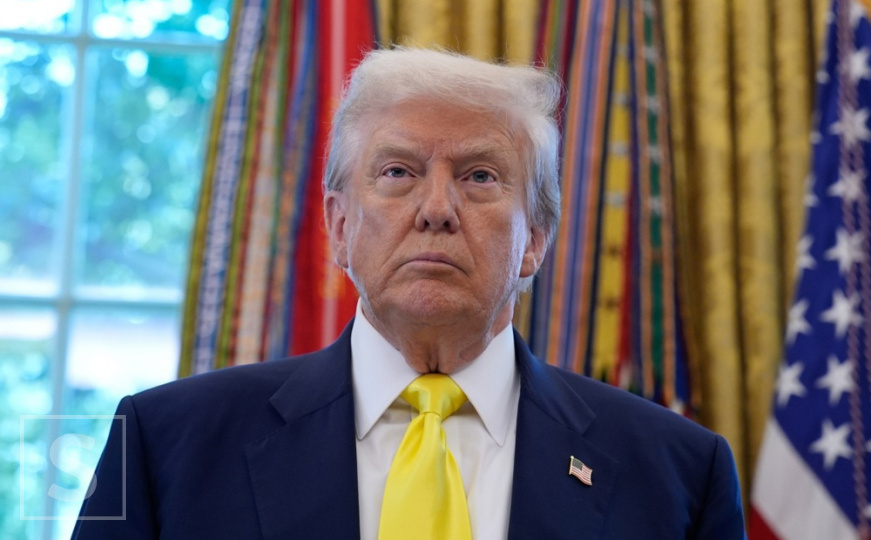
Instead of retreating, Washington is simply adapting its approach. A new U.S. doctrine emphasizes pragmatism, bilateral relations, and "peace through strength." Bosnia and Herzegovina remains an important test of Western stability and credibility.
In recent weeks, we have witnessed a sort of drama surrounding an alleged "shift in the U.S. policy" toward the Western Balkans.
Some analysts, politicians, and segments of the public in Bosnia and Herzegovina reacted almost with panic—as if Washington had suddenly abandoned its long-standing principles toward our country. However, when viewed from a broader perspective, it becomes clear that this is not a radical change of course but rather an adjustment of tactics, not strategy—one that fits within the new premises of American foreign policy.

Radiosarajevo.ba saznaje: Džanan Musa sutra predvodi KK Dubai protiv KK Bosna
This new approach is rooted in the "America First" concept and the principle of "peace through strength," with a strong focus on unilateralism and bilateralism as opposed to the previous multilateral and globalist framework. It also carries a distinctly transactional tone, ultimately driven by the goal to "Make America Great Again."
It is worth recalling that even during President Obama’s administration, Bosnia and Herzegovina was not high on Washington’s list of foreign policy priorities. At that time, BiH was largely left to its own devices, without significant U.S. engagement—especially compared to the current Biden era.
Still, the United States remains Bosnia and Herzegovina’s most reliable and important international partner. For that very reason, BiH should view this moment as an opportunity to strengthen its virtually nonexistent diplomatic and lobbying efforts—aimed at deepening strategic ties with Washington while understanding the new premises guiding American policy.
Although at times U.S. engagement may seem restrained, it has never been merely symbolic. Today’s American diplomacy operates in unconventional ways—through formal channels, but also through informal structures, and, however invisible it may appear to some, in close coordination with allies in the EU and NATO. At the same time, Washington continues to exert real pressure on those who destabilize the country from within.
The U.S. knows very well that any serious destabilization of Bosnia and Herzegovina would pose a risk not only to the region but to the wider Euro-Atlantic area. Peace and stability—also in this region—remain a priority of the new U.S. administration.
In other words, the United States continues to firmly support a united, stable, prosperous, and sovereign Bosnia and Herzegovina based on the Dayton Peace Agreement (which Washington upholds as one of the most successful peace models it has ever produced—despite its flaws). Recent American actions clearly demonstrate that goal: returning the Republika Srpska entity fully into Bosnia and Herzegovina’s constitutional and legal framework and preventing further escalation of internal tensions.

It is worth asking: has any other country in the world done for Bosnia and Herzegovina what the United States has? The answer is clearly no. That is precisely why BiH must value this support deeply—and seize this moment to extract the maximum benefit for itself. Every crisis is also an opportunity, and this one must not be wasted.
To Lobby or Not to Lobby – That Is the Question
A recurring concern is whether the U.S. is "encouraging further divisions," such as the idea of a third entity. In practice, this claim is unfounded. The U.S. approach toward Bosnia and Herzegovina consistently rests on the preservation of its territorial integrity and functionality. While Washington may occasionally display pragmatism in engaging with ethnonational leaders, this serves as a diplomatic tool—not a shift in principles.
Nevertheless, the influence of various lobbying firms and think tanks—such as the Heritage Foundation—is clearly visible. These organizations work to shape narratives about Bosnia and Herzegovina within the U.S. public sphere and political circles.
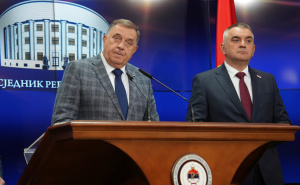
In this context, it is worth noting that although Milorad Dodik failed to secure American support for his separatist ambitions—despite spending tens of millions of dollars—he has, by adapting to the new political climate in Washington, effectively traded his personal freedom for the return of Republika Srpska into BiH’s constitutional framework. In doing so, he betrayed his own people and confirmed that his true policy is "me first." Not exactly a great deal for the citizens of Republika Srpska.
This does not diminish the fact that Dodik has, for decades, systematically and lavishly financed lobbying efforts in Washington—and it is certain that he will not stop now.
On the other hand, pro-Bosnian forces must seize this opportunity, wake up from their political hibernation, and realize that Dodik—whether in power or not—has effectively been reset to zero. He is already seeking new ways, with HDZ’s full support, to once again ride through Washington on the narrative of a "three-way division" as the alleged solution to BiH’s political dysfunction.
This is precisely the space where Bosnia and Herzegovina’s own lobbying structures must operate—to counter the ideological influence of groups like the Heritage Foundation (which circulate talking points promoting a three-entity model) and similar organizations trying to impose their own narrative about BiH.
If Bosnia and Herzegovina truly wants to become a state for all its citizens—with a balanced relationship between civic and ethnic rights—it must engage seriously in lobbying efforts in Washington. As it turns out, the devil really is in the details.
Coordination with the EU and NATO
Interestingly, just as talk of an "American retreat" began to spread, Brussels and NATO were sending precisely the opposite messages. The visit of Estonian Prime Minister Kaja Kallas to Sarajevo—and her clear statement that "the European Union will not allow a security vacuum in Bosnia and Herzegovina"—shows that the West has learned from the mistakes of the 1990s.
Today, the EU—backed by the U.S.—increasingly understands that the stability of the Western Balkans is not a humanitarian issue, but a security imperative.
In the end, perhaps it’s not so bad that occasional panic arises in Bosnia and Herzegovina about "American policy." It serves as a reminder of how decisive U.S. support still is—and how much harder it would be to contain domestic political chaos without Washington’s and Brussels’ clear pro-Western orientation.
What Bosnia and Herzegovina chronically lacks, however, is its own vision—and the ability to rely on its allies instead of constantly expecting them to put out fires we ourselves ignite.
Because if this lesson isn’t learned now—it never will be.
If pro-Bosnian forces fail to awaken and start acting strategically—through organized lobbying that challenges the narratives promoted by the Heritage Foundation on one side and Dodik’s lobbyists on the other—then the story of ethnic partition within BiH could easily find its way into future U.S. policy decisions.
So, wake up and understand what Dodik and Čović already have: they have aligned their efforts with the new principles of American foreign and domestic policy.
About author: Adnan Hadrovic is a senior advisor to the Institute for Development Impact in Washington and a former Bosnian-Herzegovinian diplomat

Radiosarajevo.ba pratite putem aplikacije za Android | iOS i društvenih mreža Twitter | Facebook | Instagram, kao i putem našeg Viber Chata.
/ Najčitanije
/ Komentari
/ Povezano


/ Najnovije